Likelihood of Success

Ron Coleman’s pretty good blog

Archive for the ‘Faith and Works’ Category

Mobius and I debate what’s good for the Jews in American politics… and then some

Posted by Ron Coleman on September 9, 2008

My friend Mobius drew me into a discussion on Facebook of what an awful thing for Israel a McCain victory would be, and I posted a link to this post, where I addressed certain aspects of that issue a little while ago.  He weighed in big time in the comments, and while this is mostly inside baseball if you’re not Jewish, I am putting so much work into responding that I thought it would be worthwhile to elevate this into a post.

As to the first, it wasn’t that long ago that, when the Iraq War was widely “recognized” by smart opinion as a dumb, losing proposition, it was Israel’s fault that it happened in the first place — the “neocons” were handmaidens for the Zionists. Now winning it was dumb, because it’s bad for Israel! Not quite blame the Jews, but an interesting variation.

This is not an argument. This is playing games. I can point to plenty of sources, such as the CATO Institute, that in the run up to the war identified the invasion of Iraq as bad policy, stam, not bad policy because it was “a war for Israel.”

So what? Libertarians don’t prove (or do) anything. Ever.  This trope can, however, be found in virtually every camp that is hostile to “neocons.” As Dore Gold writes:

On the liberal side, Chris Matthews, who hosts MSNBC’s Hardball, echoed Buchanan when he spoke about “conservative people out there, some of them Jewish…who believe that if we don’t fight Iraq, Israel will be in danger.” Likewise, former Democratic presidential candidate Gary Hart warned of “ideologues” who were not able to distinguish between their loyalty “to their original homelands” and loyalty “to America and its national interests. . . Another variation on the Israel theme is the assertion made by Nicholas Kristof, the New York Times columnist, that General Zinni heard from administration officials that the Iraq War would advance the Israeli-Palestinian peace process because “the road to Jerusalem leads through Baghdad.” According to this thesis, the Iraq War would chiefly help Israel’s drive to obtain peace on reasonable terms – still a benefit to Israel. “

How about this:

The notion that we could just waltz in and inject democracy into an extremely complicated, devout and ancient culture smacked–still smacks–of neocolonialist legerdemain. The fact that a great many Jewish neoconservatives–people like Joe Lieberman and the crowd over at Commentary–plumped for this war, and now for an even more foolish assault on Iran, raised the question of divided loyalties: using U.S. military power, U.S. lives and money, to make the world safe for Israel.

Wow, who said that? Some black-hearted neoconservative? Yeah, sure — that’s one way you could describe Joe Klein, I guess.

Now, it’s possible that Barack Obama does not share this view — but how many members of his administration, based on the hard-left crowd around him now as well as the militant black cadre that is part of his base, would disagree with these assertions?

(Mind you, the first person to fire that salvo was Pat Buchanan, who is not, by any stretch of the imagination, a Lefty, let alone a Democrat.) Furthermore, you will find few on the Left or on the Paleoconservative Right who are worried about Israel’s security prospects.

I agree, and Barack Obama is on the Left. Read the rest of this entry »
Posted in Faith and Works, Heart and spirit, Politics and Poker, Sisyphus | 5 Comments »

The Ninth of Av

Posted by Ron Coleman on August 8, 2008

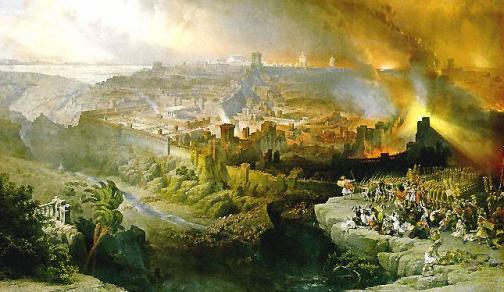
destruction-full.jpg

Jewish tradition teaches that on Tisha B’Av (the Ninth day of the month of Av) , five national calamities occurred:

  1. During the time of Moses, Jews in the desert accepted the slanderous report of the ten spies, and the decree was issued by God forbidding them from entering the Land of Israel. (1312 BCE — traditional Jewish dating)
  2. The First Temple was destroyed by the Babylonians, led by Nebuchadnezzar. 100,000 Jews were slaughtered and millions more exiled. (586 BCE)
  3. The Second Temple was destroyed by the Romans, led by Titus. Traditional sourcest teach that two million Jews died, and another one million were exiled. (70 CE)
  4. The Bar Kochba revolt was crushed by Roman Emperor Hadrian. The city of Betar — the Jews’ last stand against the Romans — was captured and liquidated. Over 100,000 Jews were slaughtered. (135 CE)
  5. The Temple area and its surroundings were plowed under by the Roman general Terentius Rufus. Jerusalem was rebuilt as a pagan city — renamed Aelia Capitolina — and access was forbidden to Jews.

Other grave misfortunes throughout Jewish history occurred on the Ninth of Av, including:

  1. The Spanish Inquisition culminated with the expulsion of Jews from Spain on Tisha B’Av in 1492.
  2. World War One broke out on the eve of Tisha B’Av in 1914 when Germany declared war on Russia. German resentment from the war set the stage for the Holocaust.
  3. On the eve of Tisha B’Av 1942, the mass deportation began of Jews from the Warsaw Ghetto, en route to Treblinka.

More here on the Ninth of Av, which begins Saturday night. Observant Jews will fast (a complete fast — no food, no water) until nightful Sunday night. For us, this is the “hardest” day of the year.

Adapted from last year.

Posted in Faith and Works, Heart and spirit, Oppression, Orient, Past is prologue | Leave a Comment »

How to write books in a prison camp

Posted by Ron Coleman on August 4, 2008

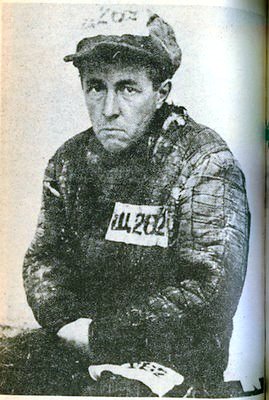
The Zek

The Zek

How Aleksandr Solzhenitsyn, whose death I noted yesterday, did it — in the New York Times obituary:

At Ekibastuz, any writing would be seized as contraband. So he devised a method that enabled him to retain even long sections of prose. After seeing Lithuanian Catholic prisoners fashion rosaries out of beads made from chewed bread, he asked them to make a similar chain for him, but with more beads. In his hands, each bead came to represent a passage that he would repeat to himself until he could say it without hesitation. Only then would he move on to the next bead. He later wrote that by the end of his prison term, he had committed to memory 12,000 lines in this way.

That’s all there is to it, I guess.  It’s easy to be stunned by this feat, even by a mathematician, and forget about writing the 12,000 lines, and writing them the way he did.  When do heart, soul and mind so powerfully coalesce in one body?

None of this is to say that I agree with every little thing Solzhenitsyn thought or said.  His affection for the neo-Stalinist regime in Russia today is hard to fathom, nationalism notwithstanding.  Yet he did write in The First Circle, forgive my not having it exactly, “The wolf is not blameworthy, but the cannibal is” — he was a nationalist, it was a world of carnivores; and Stalin’s crime was not merely that he was a murderer but that he murdered his own people. The crack that this leaves open for murdering others is not untroubling, but in truth Solzhenitsyn never advocated or defended that.

Still and all Solzhenitsyn was one of the towering figures of the last century.  Liberals, for a brief moment, recognized his courage and his brilliance, even as pragmatic conservatives such as Henry Kissinger found him inconvenient, an embarrassing guest at the table of detente, and shooed him away from the Ford White House.  After a while it seemed as if Solzhenitsyn no longer had anything to say to us.  Yet much of what he did say in terms of criticism of the West — the materialism, the moral vacuity, the lack of true spirituality — should not be as readily laughed away by thoughtful people as is depicted having been the case among the literary elite in the obituary.  Nor was the accusation against him of antisemitism, in any meaningful sense, justified; familiarity with his works cannot support the claim.

You must read the whole obituary.  If you don’t really know who Solzhenitsyn was or how he did what few writers dream of — actually had an effect on history — this is your chance.  Do not pass it by.  Don’t you want to understand what our world is, and more of how it got this way?

Posted in Ars Longa, Faith and Works, Heart and spirit, Oppression, Past is prologue, Sisyphus | 3 Comments »

Solzhenitsyn and me

Posted by Ron Coleman on August 3, 2008

Alexander Solzhenitsyn died. (UPDATE: New York Times obituary here.) Two years ago this October, on the occasion of the even of elections, I wrote on Dean’s World the following about how and why I became a conservative. That story began with Alexander Solzhenitsyn:

I recognized that I was a conservative during high school, when in support of a paper I was writing on Solzhenitsyn in a senior-year comparative literature class my ethnic-Polish teacher gave me a stack of American Spectator magazines, one of which included an article on Solzhenitsyn by Malcolm Muggeridge.

The entire gestalt of it just spoke sense to me. Was it a reaction to the tepid, petrified left-wing Jewish labor socialism of my extended family? The anger of a first-generation American (on one side) at a society that seemed (remember, I grew up in the ’60’s) so inexcusably and utterly unwilling to defend itself against what anyone could see was subversion? “Common sense,” as a Princeton friend, later dropout and current Washington operator would later describe it when recruiting me for some Reagan-era campus political / social suicide mission? Maybe it was just the natural inclination of one identified as depressingly adultoid from an absurdly young age and whose picture can be found at the Wikipedia entry for “stick in the mud.” I don’t really know, but I do remember that when I told my college roommate that I had, upon my return from an Israel program for Jewish searchers, become committed to religious observance, he said, “Well, now at least your religious ethic matches your political one” (or words to that effect).

Be that as it may, it is truth to me, even though politics, and most politicians, turn my stomach. I mean, there is some ethic in there, isn’t there?

But at the end of the day, these Democrats are the ones who so undermined the world I remember growing up in, and they continue to do so today. They are not even in the league, for patriotism and love of country and decency, of the Democratic politicians of my early youth — Lyndon Johnson, Roberty Kennedy, Hubert Humphrey. With McGovern, that ended.

Jimmy Carter sealed the deal. He made being an American embarrassing, humiliating, depressing, hopeless. Wimpy. Apologetic. Cringing. Losing.

I don’t believe any of today’s Democratic leaders have improved on Jimmy Carter, except that he had the benefit of not having to kowtow, as today’s Democrats do, so grossly to identity politics of every right- and- privilege- demanding ethnic and social subcultural group, no matter how subversive; to the hard-left on abortion rights; and he was allowed to be some kind of public Christian.

I wish there were Republicans today who had a quarter of the qualities of Ronald Reagan. Here was a great man, one who never claimed for himself the mantle of a perfect or even particularly virtuous personal life; but he loved his country, knew right from wrong, and — exercising a quality that I admire for the very scold it places on one such as myself — his ability, now proved doubly and triply, to make everyone around him think he was a dumbbell when in fact he was sly as a fox. Frankly I think George W. Bush comes quite close to these qualities. But, sadly lacking the Gipper’s ability to communicate and being the literal heir to a political tradition of some ideological infirmity to a conservative — think Jim Baker, the man who made me vote for Bill Clinton in 1992 — he is not Reagan. Nor are today’s dizzy denizens of the Capitol statesmen, by and large. Were they ever? The past takes on an undeserved elegance in sepia. The crassness of living, live and unsilenceable color makes today’s professional political class seemingly harder to swallow than its predecessors — red or blue.

But every time I step into the booth I ask myself, If this candidate could choose Ronald Reagan* or Jimmy Carter to make the keynote speech at his or her party’s nominating convention, which one would he or she choose?

The choice is simple.

—
* Captain Ed [just] posted on Reagan as well, so if you’re reading this belatedly, click through to Ed’s comment.

Cross-posted on Right-Wing News.

Posted in Faith and Works, Heart and spirit, Oppression, Politics and Poker | 1 Comment »

Soul-balm legislation?

Posted by Ron Coleman on July 27, 2008

Robert Spencer on Muslims and “hate speech” laws:

[T]he unrelenting and unanimous practice among Muslims of labeling any honest discussion of the elements of Islam that jihadists use to teach violence and supremacism as “hate” will bear bitter fruit in this: if it indeed becomes illegal in the U.S. to say something that Muslims deem offensive, it will be impossible for us to speak about the jihad ideology and Islamic supremacism precisely as they are advancing here.

Well, usually “bitter fruit” means it is the person planting who someday will wince at the eating of it. I’m afraid the consumers in this example are the rest of us, unless Bob means that instead of talking about it, non-Muslims in the West will do something worse.

Which is hardly likely.

Cross-posted on Right-Wing News.

Posted in Faith and Works, Lex scripta, Oppression | Leave a Comment »

Phoenix eve

Posted by Ron Coleman on July 14, 2008

I’m back in Phoenix, picking a jury early tomorrow morning.

I promise you we’re on the side of the angels, so you can pray or “have me in your thoughts” without reservation, and not just because we’re friends.

Posted in Faith and Works, Heart and spirit, Lex scripta | Leave a Comment »

Un-fabulous

Posted by Ron Coleman on July 10, 2008

The thing about the nuts that fall from Obama’s tree, it seems, is you get a good luck* look at the unappetizing meat in ’em when they crack open on the hard ground. Tales from the Unreality-Based Community:

A homosexual man who has a blog on Sen. Barack Obama’s campaign website is suing two major Christian publishers for violating his constitutional rights and causing emotional pain, because the Bible versions they publish refer to homosexuality as a sin. . . .

Fowler alleges both Zondervan and Thomas Nelson, with its King James Bible, manipulated Scripture without informing the public by using the term “homosexuals” in a New Testament passage, 1 Corinthians 6:9.

He told the Grand Rapids TV station in an interview he wants to “compensate for the past 20 years of emotional duress and mental instability.”

Zondervan, he contended, is misinterpreting the Bible.

“These are opinions based on the publishers,” Fowler said. “And they are being embedded in the religious structure as a way of life.” . . .

Fowler, who is representing himself in both lawsuits, says in his complaint against Zondervan that the publisher intended to design a religious, sacred document to reflect an individual opinion or a group’s conclusion to cause “me or anyone who is a homosexual to endure verbal abuse, discrimination, episodes of hate, and physical violence … including murder.”

So much… so very, very much… that is so stupid, so nuts, so God – help – Michigan about this. Where to begin? How to say when?

First… if you want it… I’ve downloaded the insane, hand-written complaint here. Go ahead, you read it. Now, the bullet points: Read the rest of this entry »

Posted in Americana, Faith and Works, Lex scripta, O Mores!, Oppression | 9 Comments »

Feltly Hats, Williamsburg

Posted by Ron Coleman on July 8, 2008

Feltly Hats, Williamsburg

Originally uploaded by Ron Coleman

This is an amazing neighborhood, the last one where the prevalance of store signs in Yiddish exceeds that of English.

Posted in Faith and Works, Metropolis, Politics and Poker | Leave a Comment »

When “I don’t know” is heresy… and when it’s not

Posted by Ron Coleman on July 6, 2008

The brilliant Penn Jillette makes a living from being a skeptic. Skepticism, he reports in the LA Times, isn’t good enough for the “reality based community, however — not on matters central to the canon:Personification of Knowledge, Newark historic courthouse

[S]omeone asked us about global warming, or climate change, or however they’re branding it now. Teller and I were both silent on stage for a bit too long, and then I said I didn’t know.

I elaborated on “I don’t know” quite a bit. I said that Al Gore was so annoying (that’s scientifically provable, right?) that I really wanted to doubt anything he was hyping, but I just didn’t know. I also emphasized that really smart friends, who knew a lot more than me, were convinced of global warming. I ended my long-winded rambling (I most often have a silent partner) very clearly with “I don’t know.” I did that because … I don’t know. . . .

The next day, I heard that one of the non-famous, non-groovy, non-scientist speakers had used me as an example of someone who let his emotions make him believe things that are wrong. . . . Later, I was asked about a Newsweek blog she wrote. . . . She ends with: “But here was Penn, a great friend to the skeptic community, basically saying, ‘Don’t bother me with scientific evidence, I’m going to make up my mind about global warming based on my disdain for Al Gore.’ … Which just goes to show, not even the most hard-nosed empiricists and skeptics are immune from the power of emotion to make us believe stupid things.”

Is there no ignorance allowed on this one subject? . . . You can’t turn on the TV without seeing someone hating ourselves for what we’ve done to the planet and preaching the end of the world. Maybe they’re right, but is there no room for “maybe”? There’s a lot of evidence, but global warming encompasses a lot of complicated points: Is it happening? Did we cause it? Is it bad? Can we fix it? Is government-forced conservation the only way to fix it? . . .

[T]he climate of the whole world is . . . complicated. I’m not a scientist, and I haven’t spent my life studying weather. I’m trying to learn what I can, and while I’m working on it, isn’t it OK to say “I don’t know”?

Skepticism has been turned on its head; doubt becomes a thought crime. What is it called when that happens, exactly? I have always liked this guy.

I can’t give Jillette all the credit in the world for this thinking, however. His skeptical principles of knowing when not to know only go so far. Perhaps it really does matter whose ox is being Gored, because when it comes to other important matters arguably at least as complicated as global warming, Jillette is bold in his ignorance when in, fact, being so makes him feel good. Read the rest of this entry »

Posted in Faith and Works, Heart and spirit, Narcissus Rex | 17 Comments »

The family secret

Posted by Ron Coleman on June 25, 2008

Maniakes writes, on Dean’s World:

You keep using that word [– atheism]. I do not think it means what you think it means.

As he demonstrates, according to a report a meaningful percentage of self-described atheists admit they really believe in God.

That’s the ones who admit it.

It’s just socially cooler in a lot of places to claim to be an atheist than to say either, “I don’t know” or “God, yeah, but religion I can’t buy into.”  Yes, even the latter; once you admit there’s a God , there’s no end to the thing.

No end to it at all!

Posted in Faith and Works, Heart and spirit, Style | Leave a Comment »