Likelihood of Success

Ron Coleman’s pretty good blog

Archive for the ‘Oppression’ Category

“Ever again”

Posted by Ron Coleman on December 27, 2007

This “best of” item from July 2007 was the number-one all-time most popular posting on Likelihood of Success since I started it in March — nearly 8,000 pageviews, the result of a particularly fortuitous Instalanche. Considering the rise of Barack Obama right now, and the deafening silence from candidates such as Obama on the Left regarding Iraq, this post perhaps still has something to say.

James Taranto (and others) got exercised last week over the fact that Barack Obama won’t get exercised over genocide.

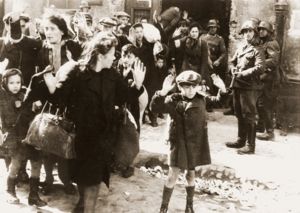
It’s a nice political point to score on him, but give him points for honesty. “Never again” is the Big Lie of the second half of the twentieth century. Tonight, on the eve of the 65th anniversary of the deportation of Jews from the Warsaw Ghetto to Treblinka, we must be honest: If we knew then what we know now, about the mass killings, the gas chambers, the sick human experimentation, the crematoria — if we knew it were going on right now …

America, and the rest of the world, would not do a damned thing about it.

Indeed, as the official position of the Left, including its handmaiden the mainstream press, becomes “we would not have agreed to fight in Iraq if Bush had not lied to us about weapons of mass destruction” — however absurd a lie that is; and this is combined with the turning away from events in Darfur, and elsewhere; and it is combined, too, with the essential silence of the “world community” in the face of genocide and mass murder, especially of the despised — the niggers of the world, whether black and Jew or even, if the politics of it is right, Arab — the horrible truth becomes ever more clear:

warsaw_ghetto_josef_bloesche-edit1.jpg

“We” simply do not care.

Posted in Oppression, Past is prologue, Politics and Poker | 8 Comments »

“One small step backward for a man”

Posted by Ron Coleman on December 26, 2007

“Best of the year,” continued.

This is one of my favorite posts that got almost no traction whatsoever, undeservedly, I thought:

One giant leap in reverse for logic and public policy debate. Instapundit falls for the “man on the moon” fallacy:

Arianna Huffington … asks: “In the Age of Terror, Isn’t Busting Toe-Tappers an Insane Use of Our Law Enforcement Resources?” Put me down for a yes vote on that one.

It’s the same argument, just sideways, as the old, “If they can put a man on the moon, why can’t they ” — anything. Anything that has nothing to do with putting a man in the moon. It is a fallacious argument meant to simulate the argument a fortiori, to wit, if they can do the larger A (put a man on the moon) surely then can do the much, much “smaller” B (serve good food on an airplane, get the cable guy to come on time, whatever). Of course B does not in any way flow from such an A; the issues are unrelated; there is no such proof.

Here, too, a major and minor premise are advertised as related and one deducible from the other, but here it is in reverse: If we have time for vice squad activities by law enforcement, “all the more so” we must have already “put a man on the moon,” i.e., solved terrorism. Oh, we haven’t done B? Then what business do we have doing A?! See what a bad idea A is?

But A does not flow from B at all. They have nothing at all in common at all except for the fact that both are described under the very broad rubric of law enforcement functions. But a reduction in vice squad activity in a Midwestern city has no bearing on the resources that will actually be made available, consequently, in the activities of entirely different law enforcement agencies, in different places, involving personnel with entirely different qualifications, in fighting terrorism — just as a posited reduction in traffic enforcement, drug enforcement, zoning laws and even burglary, rape and assault investigations are utterly unrelated to terrorism. All these things are “small” B’s to the larger A, but besides being smaller and both being done by people allowed to carry guns, they are completely unrelated.

It’s a very bad faith argument, a cloak for the true argument, which is, “I don’t like public morals laws.” So then come out and say that, and make that case. But the juxtaposition with terrorism is the chicken’s way out. It not only cloaks the bad argument but wraps the maker in a cynical mantle of patriotism and concern with terrorism. I’m not surprised to see it from the phony Huffington. As to Instapundit — here Glenn is simply caught up in his libertarian disdain for public morals laws and has switched his law professor brain entirely in favor of a head full of mush.

Too bad. If Glenn is against laws that prohibit solicitation of intimate activities in public facilities, I’d like to see him make those arguments, not endorse fake ones like this. “In the Age of Terror” has no more logical force than urging your favorite policy because it’s better “for the children.”

UPDATE: A related argument, from Kim du Toit, and one from Michelle Malkin.

Posted in O Mores!, Oppression | 4 Comments »

Absolute power corrupts, idiotically

Posted by Ron Coleman on December 24, 2007

Betsy Newmark:

John Kerry has been pressuring cable companies and the NFL to reach an agreement so that more people could see Saturday’s possibly history-making game between the undefeated New England Patriots and the New York Giants.

Kerry asked football Commissioner Roger Goodell today to move the game to NBC – and threatened Senate hearings if he does not.

“Under the unfortunate circumstance that this matter remains unresolved, leaving 60 percent of households across the country – including thousands in Massachusetts – without access to Saturday’s game, I will ask the Senate Commerce Committee to hold hearings on how the emergence of premium sports channels are impacting the consumer,” he wrote to Goodell today in a letter released by his office.

The Massachusetts Democrat added that he would “consider what legislative measures may be necessary to ensure that consumers are more than bystanders in this process.”

I suppose that would come under Americans’ right to life, liberty, and seeing important NFL games.

Is there no way he can get the nomination again?

Posted in Oppression, Politics and Poker | 7 Comments »

Cultural exchange is not a one way street

Posted by Ron Coleman on December 18, 2007

We always assume, in our culture, that more information, more transparency, more exchange is better.

But as Avakesh says, “on this day [tomorrow], a fast was proclaimed because the Torah was translated into Greek. This is why.”

(The term ruach hakodesh in the post literally means “Holy Spirit” — that is, Divine inspiration.)

Posted in Faith and Works, Oppression, Past is prologue | 6 Comments »

Solving Islamophobia

Posted by Ron Coleman on December 4, 2007

Robert Spencer has a … “road map,” let’s call it:

At the [Islamaphobia] Conference these wise souls will spend two days bemoaning hostility directed at Muslims and scratching their heads over why anyone might be upset with them. And although the participants will no doubt enjoy the two days in Constantinople, I could save them the trip. In the next two minutes, I will solve the problem of “Islamophobia,” right here, right now. That’s right! And there is nothing up my sleeve, ladies and gentlemen!In the first place, attacks on innocent civilians are never justified. Louts, thugs and vigilantes have no excuse, and anyone who targets random Muslims and commits violence against them deserves to be punished to the full extent of the law.

But if one wants to understand why it is happening, and what can be done to end it, no two-day star-studded conference is needed — unless, of course, that conference is meant to highlight the victim status of Muslims and divert attention from jihad terror activity. if Muslims want to end “Islamophobia” instantaneously, here’s how they can do it:

Go there and read it.

Posted in Faith and Works, Oppression, Sisyphus | Leave a Comment »

The Muslim grip

Posted by Ron Coleman on November 26, 2007

Unshakable — for some people, anyway.

UPDATE:  The rest of the story.

Posted in Oppression, Orient | 4 Comments »

What is to be done?

Posted by Ron Coleman on November 19, 2007

Christopher Hitchens (via Instapundit):

“[T]he cabinet,” according to the Nov. 18 New York Times, “has sent legislation to the Parliament softening the de-Baathification law that had prevented former Baathists’ working in government jobs.” I wonder how many people, reading that ordinary sentence about “the cabinet” and “the Parliament,” as reported also in independent Iraqi media, have any idea what it means when compared with the insane proceedings of the totalitarian abattoir state that was Iraq until 2003.

Now juxtapose that with this Instapundit link:

NOT EXACTLY POSITIVE COVERAGE FROM THE NEW YORK TIMES:

Democrats in Congress failed once again Friday to shift President Bush’s war strategy in Iraq, but insisted that they would not let up. Their explanation for their latest foiled effort seemed to boil down to a simple question: “What else are we supposed to do?”

This is the same party whose legislative leader said, referring to Ronald Reagan, “The evil is in the White House” when he faced down Stalinism’s heirs. Let me give you the whole quote from the now mistily-remembered Tip O’Neill:

The evil is in the White House at the present time. And that evil is a man who has no care and no concern for the working class of America and the future generations of America, and who likes to ride a horse. He’s cold. He’s mean. He’s got ice water for blood.

Talk about ice water. The Democratic leadership, fearing their left flank, actually want to retreat, not when we’re losing, but when we’re winning — literally to snatch defeat from the jaws of victory and to turn over an entire country to an otherwise defeated “totalitarian abattoir state” — as we’ve done before.

“What else are we supposed to do?”

Cross-posted on Right Wing News.

Posted in Oppression, Orient, Stragety | 2 Comments »

Their day in court

Posted by Ron Coleman on November 19, 2007

Dahlia Lithwick writes perceptively about how critical it is that litigants — especially in family court — feel they have been heard by the court:

Last week in Las Vegas, Reno, Nev., millionaire Darren Mack shocked the court by pleading guilty, midtrial, to killing his estranged wife, Charla, in June 2006. . . . In the weeks before he murdered Charla, Darren Mack was frustrated and then enraged by Judge Weller’s interim custody and support order, which resulted in shared physical custody and the requirement that Darren pay Charla $10,000 per month in interim spousal support. Darren didn’t pay, Weller found him in contempt, and Darren declared bankruptcy. Convinced that Weller “had made up his mind prior to coming to court, … didn’t like him and no matter what he did, Weller would rule against him,” as a friend explained, Darren launched a crusade. . . .

Mazoltuv Borukhova was outraged by the Oct. 3 decision of Sidney F. Strauss, a state Supreme Court judge in Queens, to transfer temporary primary custody to Malakov, evidently without a hearing. Even if a judicial move like this sounds familiar—courtesy of the Britney Spears 24-hour legal cable extravaganza—it’s almost never done. Judge Strauss, however, switched custody because Borukhova “was allegedly not cooperating with supervised visitation.” . . .

I’ve come to suspect . . . that Mack may have snapped because, after years of feeling listened-to in the family courts, even when he lost, he came across a judge who seemed to reach swift conclusions, without always hearing him out.

After he pleaded guilty last week, Mack went out of his way to thank Judge Herndon, saying he appreciated the “integrity” the judge had shown throughout the murder trial. There is much that needs fixing in the family law system. But, at least from the perspective of these two aggrieved parents, the quickest fix seems to be a family court judge who schedules one more conference, and presides over one more hearing, and truly listens, even when she thinks she’s heard it all before.

These complaints are in the air all day if you are involved, as I am, with litigation matters that implicate anyone but the largest corporations. They’re especially pernicious in family court, where the judges are required to get involved in situations full of raw emotion and to issue rulings that are almost certain to inflame more.

But in almost any case, Lithwick is right: Nothing — nothing — outrages litigants as much as the perception that the judge isn’t listening, has already made up his mind, and isn’t fair. Thus I have found that many settlements, objectively unreachable, have been achievable when a judge, or even a court-appointed referee or other neutral, spends “quality time” in his or her chambers at a judicial settlement conference. It is ideal if both sides will agree to a period where each litigant can have the judge to him- or herself.

All of a sudden it turns out that, quite often, it really isn’t “about the money,” when a person feels he has had his day, however brief, “in court.” It says something about our litigation system, and about the arrogation of power by the government through the courts, that this is so often impossible to achieve. A large part of the complication comes from the increasing criminalization of almost every aspect of the family law system in the states, as extensively written about by bloggers such as Trudy Schuett.

It would be awful to contemplate that judges might start listening to these stories because it’s dangerous for them not to.

Cross-posted at Right Wing News.

Posted in Americana, Lex scripta, Oppression | 4 Comments »

Our ugly friends, the Saudis

Posted by Ron Coleman on November 18, 2007

What does a small-c-conservative Jew do with the Saudis?

Their latest exercise (or perhaps merely their latest one to draw worldwide attention) in medieval brutality, in which a female rape victim has been “sentenced” for her “crime” (see here for a more precise explanation of what really happened) is already well known on the Web. This regime is not ready for prime time, from the civilization point of view.

Where does that leave us?

Time out, here: By “us” I mean conservatives. And by conservatives, I mean conservatives who are sympathetic to the desire of Jewish inhabitants of the State of Israel not to be murdered. I thus read out of the movement antisemitic paleoconservatives such as Patrick Buchanan; yet I am not a neoconservative or even a Zionist either — just a politically conservative Jew who observes that conservatives are the best political friends of Jews in this country and in Israel.

Now, I find the most strident anti-Saudi voices are not Jewish, or Israeli. This is despite the fact that most of those voices, such as that of my friend Mary Madigan, are fabulously pro-Israel. Many neoconservatives, such as Daniel Pipes, sing much the same tune, and other conservatives, such as Ivan Eland of the Cato Institute, urge only a nominally more “balanced” approach that focuses entirely on the Kingdom’s tyrannical nature — the criticism of neocons being not their blindness to the strategic value of the Saudi relationship but rather their supposed oversensitivity on the importance of oil prices.

The United States should take a middle ground between the confrontational approach championed by neoconservatives and the Bush administration’s policy of appeasing the Saudi regime. The Saudi government is a medieval, despotic regime with an abysmal human rights record on a par with Iraq’s. The United States should withdraw political support from the regime and withdraw the U.S. military forces stationed on Saudi territory. The United States should not pull any diplomatic punches in pressuring the Saudi monarchy on its poor human rights record, its programs to acquire weapons of mass destruction, and its indirect support for terrorism.

Essentially, like the authoritarian “rogue states” (Iraq, Iran, Syria, Libya, Sudan, Cuba and North Korea), Saudi Arabia should be treated with suspicion, not friendship. At the same time, it should not be targeted for U.S. military attacks unless it is found directly culpable in sponsoring a terrorist attack against a U.S. target.

Putting Saudi Arabia essentially along the Axis of Evil is not a “middle ground,” however, if there is to be any hope of the relationship yielding strategic advantage for the U.S. By and large, conservative opinion in this country wants the Bush Administration to be tougher on the Saudis; and, contrary to what would be predicted by left wing and nativist fantasies about the “Zionist lobby,” this consensus by and large ignores what the primary victims of Islamist terrorism thing about Saudi Arabia’s role in the game: The Israelis, who recognize that Saudi Arabia is probably their last, best hope for a major Arab power that could broker some version of a Mideast “arrangement” that could perhaps give Israel decades more time to wait out some form of evolution in the Arab world away from violence and toward what we in the west regard as civilization — Israeli’s only long-term hope for survival from external threats.

There is no question that, as much as anyone else, the Saudis — by promoting the extremist Wahabi version of Islam — have done more to inflame Muslims to murderous violence than any other group, governmental or otherwise. But it is an error to conflate “the Saudis” into one homogeneous entity with only one agenda, except to the extent that that agenda is the maintenance of their continued power and influence. That bullet point on their “to do” list remains a key one, and that is why it is all but official Saudi policy that the State of Israel is a political and historical reality. That’s why the Israelis were ahead of many of their strongest supporters, who instinctively reject American military support of the Kingdom, and explicitly stated their support of a major U.S. arms sale to the Saudis last summer.

Saudi Arabia is a terrible place to live, but virtually none of us live there. Unlike Saddam Hussein’s Iraq, it is neither warlike in the traditional sense nor genocidal. What it once had in common with Saddam, its support of international terrorism, is clearly a policy that is changing. That does not mean we can expect the House of Saud to hand over its own members who have been supporting, and undoubtedly continue to support, our worst terrorist enemies, but it does mean that, unlike Saddam, there is a toehold of influence that the U.S. has over that process. What other powerful friends — with, or without scare quotes — does the U.S. have in the Arab Mideast?

Cross-posted on Right Wing News.

Posted in Oppression, Orient, Stragety | 3 Comments »

Anonymity and cowardice

Posted by Ron Coleman on November 14, 2007

My friend Marc Randazza commented at my other blog regarding my comments on this topic as follows:

“most anonymous commentary is simply a matter of moral cowardice”? Ron, for the love of Thor. But for anonymous commentary, I doubt we would have broken free of the British Empire. We’d all… well, we’d all be speaking ENGLISH right now!

Anonymous speech is vital to a free society, and is often the lifeblood of core political speech. The First Amendment protects an individual’s right to speak anonymously. See McIntyre v. Ohio Elections Comm’n, 514 U.S. 334, 342 (1995) (“[A]n author’s decision to remain anonymous . . . is an aspect of the freedom of speech protected by the First Amendment.”).

Why do you think that is?

Consider the fact that without anonymous speech, there would likely be no United States of America. Neither Alexander Hamilton nor Benjamin Franklin affixed their names to their missives that fed the fires of the Revolution. If they had, they likely would have perished in the hangman’s noose, or in King George’s dungeons. The Federalists and Anti-Federalists alike were forthcoming in their political debates because they were shielded by their pseudonymity.

Today, political dissidents, corporate whistle-blowers, and other guardians of liberty are shielded by their anonymous nature. Without the ability to speak anonymously, the marketplace of ideas would feel a chilling wind blow through it, and more than a few members would close up shop.

Yes, sometimes bigots, defamers, and just plan jerks hide behind the shield of anonymity. But, I’m not going to throw the baby out with the bath water.

Unfortunately, you’re not the only one who is a little bit myopic when it comes to anonymous speech. See Calling for Harm to the First Amendment.

I’m not buying it, Marc. I think you have come with an excellent exemplar of “the exception that proves the rule.” Why, you’ve had to go back over two centuries, to a time of revolution!, to find a case of meritorious, substantial and truly brave anonymous speech. After all, I said “most anonymous commentary.”

Today there are so many systems in place for people with legitimateunknown-comic.jpg whistle-blowing information to take their whistles. Political “dissidence” is a joke; it holds no personal risks whatsoever in our place and time unless perhaps you work in academia; yet these self-styled “dissidents” — mainly scofflaws, punks and tinfoil-hatters — award themselves Purple Hearts every day. Luckily their speech usually harms no one meaningfully (I do not count the victims of bad policymaking by intimidated politicians, who bear their own guilt) and in any event I believe political speech is and should be completely privileged.

On the other hand, regarding personal and commercial defamation, I’d like to see the anonymity pendulum move a little toward the rational and fair — for there is nothing unfair about asking a man to stand up for what he believes if he insists on broadcasting it to 6 billion people. I am aware of the what the Supreme Court said in 1955. I am suggesting we reconsider the question — especially in light of what the Internet has done, is doing, and will do to our society. I am not saying to change course 180 degrees, but right now, it’s virtual open season on people with reputations by people with axes to grind.

I couldn’t care less if the vast majority of participants in the marketplace of expression (the marketplace of ideas actually still does have a price of entry, but most of us don’t even know where the front door is) “close up shop,” as you say. Perhaps a few other shops that ought not to close would also remain open.

Posted in Oppression, Sisyphus | 6 Comments »