Likelihood of Success

Ron Coleman’s pretty good blog

Archive for the ‘Heart and spirit’ Category

It is inscribed

Posted by Ron Coleman on September 29, 2008

Rosh Hashana -- Arthur Szyk

Rosh Hashana -- Arthur Szyk

At the end of the year, Jews deliver an annual report to their Majority Shareholder and pray and hope to have their respective contracts extended — and even for an increase in compensation for a job well done. That is Rosh Hashana, which means the Head of the New Year, and which begins tonight.

The surprising, and very not-American, thing we learn about Rosh Hashana is that it is at its heart an expression of our own acknowledgment of God’s status as the Boss. At other times of year we focus on other aspects of our relationship with God, but at Rosh Hashana it is Kingship that rules.

Independence is so highly valued in our society that some people think that independence is the only virtue, which is really a sort of arrested adolescence, but one much celebrated in our time and place. Thus it’s not surprising that religions based on hierarchies of spiritual authority — scriptural, ethical, behavioral, pastoral — must fight uphill to survive. Maintaining a feisty, free-enterprising, yeoman spirit in the profane stations of life while acknowledging spiritual, and essentially governing, principles that appear to be inconsistent with Yankee virtues is one of the challenges to all religious people in America. I don’t claim to know how to do it, but identifying the challenge, at least, is a step in the direction of addressing it.

If we could ever actually acknowledge that God is the Ruler of our lives — really, as really as we acknowledge the existence of the computer you’re reading this on, of the sky above us, of your left hand — we would never do anything wrong (i.e., sin), and never feel any fear (also a kind of transgression). That’s a tall order, and ironic for how, in its apparent simplicity, achieving would be a giant feat for anyone. Its apotheosis is the answer of great people of faith to what many people believe is an unanswerable query to God: How can tragedy (such as of the scope that has happened in our lives or the lives of our parents) be allowed to persist? The answer: “For the unbeliever there is no answer. For the believer” — believing, as I said, in the very reality of God’s rule over everything, not merely the ideological adoption of it — “there is no question.”

I didn’t say it was easy. But hopefully one’s progress report will report, at least… some progress.

If you’re curious, you can learn the fundamentals of Rosh Hashana here. You may want to look at this excerpt from Rabbi Shimon Apisdorf’s Rosh Hashana Survival Kit, a classic in its own right.

And remember, Rosh Hashana is, as the liturgy teaches, the “birthday of the whole world,” not just a special date for the Jews. So happy birthday, world, and may we all be blessed for a year far better than the one that just ended.

Originally posted on Dean’s World, Rosh Hashana 2006.
Posted in Faith and Works, Heart and spirit | 1 Comment »

The eve of judgment

Posted by Ron Coleman on September 28, 2008

Monday night begins Rosh Hashana. It must be mentioned, it must be addressed, it must be reckoned
with, no matter how ecumenical a blog I want to have.

Recipient

Recipient

It has been an extraordinarily eventful year for me on many, many planes, overwhelmingly in ways for which I am very grateful to God.  Gratitude is the alpha of service of God, and of self-fulfillment, too — two endeavors that, to the thoughtless, appear to be opposite, but which are in fact one.  From my point of view, neither is achieved fully without the other.

I say “from my point of view” even though my cousin Debbie, the writer, taught me many years ago that when you write something you need not say such a thing, because of course it is your point of view.  You wrote it.  But I say it so as not to offend my many friends who read here and who disagree and are, by habit, less offended if a proposition is put forth in a manner that sounds less absolute.  It is a form of apology, and of course we know just how apologetic your blogger is at any time!

More of my point of view is my reiteration that when speaking of “gratitude,” God is the Whom to which gratitude must be directed, which is not to say that gratitude toward other individuals for their specific kindnesses is not also appropriate.  But “I’m grateful” without an object — this makes no sense. (I once blogged about this somewhere and, well… I can’t find it. A lot of that going around lately. — here it is!)  I have never understood people expressing free-floating generic “gratitude” directed at … nothing. I do not consider it to be any more logical to say, “It is directed at the Universe,” which is essentially the same exact thing.  I believe that people who express “gratitude” without acknowledging the source of the benefit to which they claim to be grateful, are saying words, but not, really, expressing gratitude.  Gratitude must have an object because it is an acknowledgment of need, or lack, fulfilled by another.

But I am not here to fight, not today.  Forgive the digression — there, apologies again!  Well, regret is part of Rosh Hashana, too.

Round and round

Round and round

And I for one am grateful, grateful to God, for a year that has been very good to me, and to many of the people I care about the most.  Much progress, some of it incremental, but progress all the same.

I am grateful to have reached a point where I can perceive and appreciate incremental progress, too.

I am grateful to be able to interact with so many fine, deep, multifaceted people whose intentions are good.

I am grateful for middle age.  I was born to be middle aged and now I am home.  I hope I get to stay here for a long time!

I am grateful for life, for perspective, for wisdom, judgment, the ability to give, the powers that I have, for the judges who are starting to listen and the clients who do their best to pay.

I am grateful for the things that ought not be written, but should be said.

Grateful… step one.  It is the first step, and while we must go beyond it, gratitude is the step that is never completed.

Thank you.

Posted in Faith and Works, Heart and spirit | 4 Comments »

Gazoo — who knew?

Posted by Ron Coleman on September 24, 2008

Dum dum!

Dum dum!

Looking for an image of The Great Gazoo for this post at LIKELIHOOD OF CONFUSION®, I quickly found and linked to this one at Wikipedia.  My post had, really, nothing to do with Gazoo, but because that post — about Carolyn Elefant‘s new e-book entitled Social Networking For Lawyers — alluded to the “books for dummies” concept, well, obviously who appeared to me but the little guy himself?

So I took a second I don’t have to read the first paragraph of the article, and I saw … this:

The Great Gazoo is voiced by Harvey Korman.

I did not know this!

Did everyone know this but me?

But of course!  Of course that’s Harvey Korman!

Thats Headley, not Heddy!

That's Hedley, not Heddy!

I… I have a soft spot for Harvey Korman.  I blogged about this somewhere when he died, but I can’t find where.  (Did I just imagine it?)  There was something about the fact that he really was, as a comic actor, just a notch above, well, mediocre.  Maybe I feel that if I had pursued an acting career, that’s what I would have actually come across as, not the comic genius I really thought I was, so identified with him.  Well, yeah, Harvey Korman was successful, as these things go, but always as a second banana, and he just wasn’t ever really very good.

But in fact he was delicious.

He was so, so Gazoo!  And both of them seemed, really, across the small screen to me at least, to really be good, good guys deep inside.

Dum-dum!

Posted in Ars Longa, Heart and spirit, Jocularity | Leave a Comment »

Sept. 11, 2008

Posted by Ron Coleman on September 11, 2008

Sept. 11, 2008

Originally uploaded by Ron Coleman

The City lives!

Posted in Americana, Heart and spirit, Metropolis | Leave a Comment »

The City

Posted by Ron Coleman on September 11, 2008

Manhattan has been compelled to expand skyward because of the absence of any other direction in which to grow. This, more than any other thing, is responsible for its physical majesty. It is to the nation what the white church spire is to the village–the visible symbol of aspiration and faith, the white plume saying that the way is up. The summer traveler swings in … and as [his car] glides above the pigeon lofts and back yards of Queens looks southwest to where the morning light first strikes the steel peaks of midtown, and he sees its upward thrust unmistakable: the great wall of sand towers rising, the smoke rising, the heat not yet rising, the hopes and ferments of so many awakening millions rising–this vigorous spear that presses heaven hard….

The subtlest change in New York is something people don’t speak much about but that is in everyone’s mind. The city, for the first time in its long history, is destructible. A single flight of planes no bigger that a wedge of geese can quickly end this island fantasy, burn the towers, crumble the bridges, turn the underground passages into lethal chambers, cremate the millions. The intimidation of mortality is part of New York now: in the sound of jets overhead, in the black headlines of the latest edition. All dwellers in cities must live with the stubborn fact of annihilation; in New York the fact is somewhat more concentrated because of the concentration of the city itself, and because, of all targets, New York has a certain clear priority. In the mind of whatever perverted dreamer who might loose the lightning, New York must hold a steady, irresistible charm.

It used to be that the Statue of Liberty was the signpost that proclaimed New York and translated it for all the world. Today Liberty shares the role with Death. Along the East River, from the razed laughterhouses of Turtle Bay, as though in a race with the spectral flight of planes, men are carving out the permanent headquarters of the United Nations–the greatest housing project of them all. In its stride, New York takes on one more interior city, to shelter, this time, all governments, and to clear the slum called war. New York is not a capital city–it is not a national capital or a stage capital. But it is by way of becoming the capital of the world. The buildings, as conceived by architects, will be cigar boxes set on end. Traffic will flow in a new tunnel under First Avenue. Forty-seventh Street will be widened (and if my guess is any good, trucks will appear late at night to plant tall trees surreptitiously, their roots to mingle with the intestines of the town). Once again the city will absorb, almost without showing any sign of it, a congress of visitors. . . .

The city at last perfectly illustrates both the universal dilemma and the general solution, this riddle in steel and stone is at once the perfect target and the perfect demonstration of nonviolence, of racial brotherhood, this lofty target scraping the skies and meeting the destroying planes halfway, home of all people and all nations, capital of everything, housing the deliberations by which the planes are to be stayed and their errand forestalled.

A block or two west of the new City of Man in Turtle Bay there is an old willow tree that presides over an interior garden. It is a battered tree, long-suffering and much-climbed, held together by strands of wire but beloved of those who know it. In a way it symbolizes the city: life under difficulties, growth against odds, sap-rise in the midst of concrete, and the steady reaching for the sun. Whenever I look at it nowadays, and feel the cold shadow of the planes, I thing: “This must be saved, this particular thing, this very tree.” If it were to go, all would go–the city, this mischievous and marvelous monument which not to look upon would be like death.

E. B. White, Here is New York (1949) .

Posted in Americana, Heart and spirit, Homo sapiens, Metropolis, Past is prologue, Sisyphus | Leave a Comment »

Mobius and I debate what’s good for the Jews in American politics… and then some

Posted by Ron Coleman on September 9, 2008

My friend Mobius drew me into a discussion on Facebook of what an awful thing for Israel a McCain victory would be, and I posted a link to this post, where I addressed certain aspects of that issue a little while ago.  He weighed in big time in the comments, and while this is mostly inside baseball if you’re not Jewish, I am putting so much work into responding that I thought it would be worthwhile to elevate this into a post.

As to the first, it wasn’t that long ago that, when the Iraq War was widely “recognized” by smart opinion as a dumb, losing proposition, it was Israel’s fault that it happened in the first place — the “neocons” were handmaidens for the Zionists. Now winning it was dumb, because it’s bad for Israel! Not quite blame the Jews, but an interesting variation.

This is not an argument. This is playing games. I can point to plenty of sources, such as the CATO Institute, that in the run up to the war identified the invasion of Iraq as bad policy, stam, not bad policy because it was “a war for Israel.”

So what? Libertarians don’t prove (or do) anything. Ever.  This trope can, however, be found in virtually every camp that is hostile to “neocons.” As Dore Gold writes:

On the liberal side, Chris Matthews, who hosts MSNBC’s Hardball, echoed Buchanan when he spoke about “conservative people out there, some of them Jewish…who believe that if we don’t fight Iraq, Israel will be in danger.” Likewise, former Democratic presidential candidate Gary Hart warned of “ideologues” who were not able to distinguish between their loyalty “to their original homelands” and loyalty “to America and its national interests. . . Another variation on the Israel theme is the assertion made by Nicholas Kristof, the New York Times columnist, that General Zinni heard from administration officials that the Iraq War would advance the Israeli-Palestinian peace process because “the road to Jerusalem leads through Baghdad.” According to this thesis, the Iraq War would chiefly help Israel’s drive to obtain peace on reasonable terms – still a benefit to Israel. “

How about this:

The notion that we could just waltz in and inject democracy into an extremely complicated, devout and ancient culture smacked–still smacks–of neocolonialist legerdemain. The fact that a great many Jewish neoconservatives–people like Joe Lieberman and the crowd over at Commentary–plumped for this war, and now for an even more foolish assault on Iran, raised the question of divided loyalties: using U.S. military power, U.S. lives and money, to make the world safe for Israel.

Wow, who said that? Some black-hearted neoconservative? Yeah, sure — that’s one way you could describe Joe Klein, I guess.

Now, it’s possible that Barack Obama does not share this view — but how many members of his administration, based on the hard-left crowd around him now as well as the militant black cadre that is part of his base, would disagree with these assertions?

(Mind you, the first person to fire that salvo was Pat Buchanan, who is not, by any stretch of the imagination, a Lefty, let alone a Democrat.) Furthermore, you will find few on the Left or on the Paleoconservative Right who are worried about Israel’s security prospects.

I agree, and Barack Obama is on the Left. Read the rest of this entry »

Posted in Faith and Works, Heart and spirit, Politics and Poker, Sisyphus | 5 Comments »

Dialogue

Posted by Ron Coleman on August 21, 2008

Teenage son (reaching for French fry):  I think this turns out to be one of the best inventions ever, huh.

Plate O.

Plate O.

Me:  What?

Teenage son:  French fries.

Me:  I guess.  Especially when you adjust for all other possible French inventions.

Teenage son:  I guess, yeah.

Me:  Thing is, it’s a little like Chinese food, you know?  When you order them, and when you first sit down with them, you can’t believe how great it’s going to be.  Then halfway through you realize you’re eating the stuff, but you’re not enjoying them at all.

Teenage son:  Yeah…

Me:  But you do keep eating them, because they are that good.  But by the time you’re down to the skinny overcooked little ones, you’re disgusted with yourself.  You don’t ever want to see another French fry.

Teenage son:  Guess you’re right.

Me:  Sometimes.  But I’m still eating them, aren’t I?

Posted in Americana, Heart and spirit, Sisyphus | 2 Comments »

Hey, wait a minute!

Posted by Ron Coleman on August 18, 2008

Bob Miller on Beyond BT:

At Yael’s home, I also met the famed lawyer Ron Coleman, as proven by the attached photo he took with a small electronic device. This reassured us that we both existed independently of the Web.

Wouldn’t not taking the picture with a small electronic device have actually been somewhat more reassuring?

Posted in Heart and spirit, Jocularity, Nuvo-Techno | Leave a Comment »

The Ninth of Av

Posted by Ron Coleman on August 8, 2008

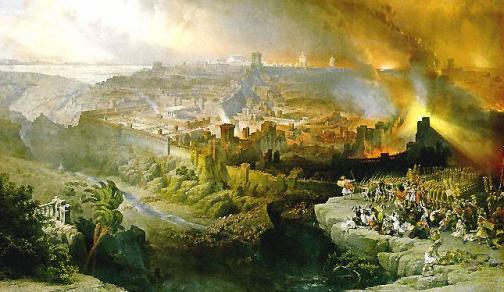
destruction-full.jpg

Jewish tradition teaches that on Tisha B’Av (the Ninth day of the month of Av) , five national calamities occurred:

  1. During the time of Moses, Jews in the desert accepted the slanderous report of the ten spies, and the decree was issued by God forbidding them from entering the Land of Israel. (1312 BCE — traditional Jewish dating)
  2. The First Temple was destroyed by the Babylonians, led by Nebuchadnezzar. 100,000 Jews were slaughtered and millions more exiled. (586 BCE)
  3. The Second Temple was destroyed by the Romans, led by Titus. Traditional sourcest teach that two million Jews died, and another one million were exiled. (70 CE)
  4. The Bar Kochba revolt was crushed by Roman Emperor Hadrian. The city of Betar — the Jews’ last stand against the Romans — was captured and liquidated. Over 100,000 Jews were slaughtered. (135 CE)
  5. The Temple area and its surroundings were plowed under by the Roman general Terentius Rufus. Jerusalem was rebuilt as a pagan city — renamed Aelia Capitolina — and access was forbidden to Jews.

Other grave misfortunes throughout Jewish history occurred on the Ninth of Av, including:

  1. The Spanish Inquisition culminated with the expulsion of Jews from Spain on Tisha B’Av in 1492.
  2. World War One broke out on the eve of Tisha B’Av in 1914 when Germany declared war on Russia. German resentment from the war set the stage for the Holocaust.
  3. On the eve of Tisha B’Av 1942, the mass deportation began of Jews from the Warsaw Ghetto, en route to Treblinka.

More here on the Ninth of Av, which begins Saturday night. Observant Jews will fast (a complete fast — no food, no water) until nightful Sunday night. For us, this is the “hardest” day of the year.

Adapted from last year.

Posted in Faith and Works, Heart and spirit, Oppression, Orient, Past is prologue | Leave a Comment »

How to write books in a prison camp

Posted by Ron Coleman on August 4, 2008

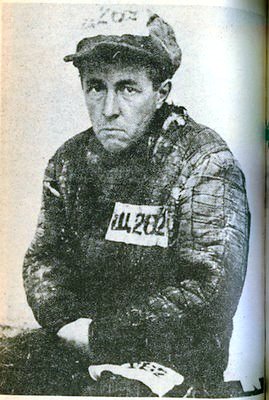
The Zek

The Zek

How Aleksandr Solzhenitsyn, whose death I noted yesterday, did it — in the New York Times obituary:

At Ekibastuz, any writing would be seized as contraband. So he devised a method that enabled him to retain even long sections of prose. After seeing Lithuanian Catholic prisoners fashion rosaries out of beads made from chewed bread, he asked them to make a similar chain for him, but with more beads. In his hands, each bead came to represent a passage that he would repeat to himself until he could say it without hesitation. Only then would he move on to the next bead. He later wrote that by the end of his prison term, he had committed to memory 12,000 lines in this way.

That’s all there is to it, I guess.  It’s easy to be stunned by this feat, even by a mathematician, and forget about writing the 12,000 lines, and writing them the way he did.  When do heart, soul and mind so powerfully coalesce in one body?

None of this is to say that I agree with every little thing Solzhenitsyn thought or said.  His affection for the neo-Stalinist regime in Russia today is hard to fathom, nationalism notwithstanding.  Yet he did write in The First Circle, forgive my not having it exactly, “The wolf is not blameworthy, but the cannibal is” — he was a nationalist, it was a world of carnivores; and Stalin’s crime was not merely that he was a murderer but that he murdered his own people. The crack that this leaves open for murdering others is not untroubling, but in truth Solzhenitsyn never advocated or defended that.

Still and all Solzhenitsyn was one of the towering figures of the last century.  Liberals, for a brief moment, recognized his courage and his brilliance, even as pragmatic conservatives such as Henry Kissinger found him inconvenient, an embarrassing guest at the table of detente, and shooed him away from the Ford White House.  After a while it seemed as if Solzhenitsyn no longer had anything to say to us.  Yet much of what he did say in terms of criticism of the West — the materialism, the moral vacuity, the lack of true spirituality — should not be as readily laughed away by thoughtful people as is depicted having been the case among the literary elite in the obituary.  Nor was the accusation against him of antisemitism, in any meaningful sense, justified; familiarity with his works cannot support the claim.

You must read the whole obituary.  If you don’t really know who Solzhenitsyn was or how he did what few writers dream of — actually had an effect on history — this is your chance.  Do not pass it by.  Don’t you want to understand what our world is, and more of how it got this way?

Posted in Ars Longa, Faith and Works, Heart and spirit, Oppression, Past is prologue, Sisyphus | 3 Comments »