Likelihood of Success

Ron Coleman’s pretty good blog

Archive for the ‘Heart and spirit’ Category

Rights in the abstract

Posted by Ron Coleman on November 5, 2009

What could make the director of a Planned Parenthood Clinic quit her job and join an anti-abortion group?

Oh, just abortion:

“I had never seen an abortion happen on an ultrasound,” she said. “My job during the procedure was to hold the probe on the woman’s abdomen. I could see the whole profile of the baby 13 weeks head to foot. I could see the whole side profile. I could see the probe. I could see the baby try to move away from the probe.” . . .

Although she had seen ultrasounds before, including during her own pregnancy, Johnson said she had never seen an ultrasound image during an abortion. She is unclear why, as the director of the clinic, she was asked to be in the procedure room on that day, because it was not a normal part of her duties. Still, Johnson said, the experience changed her forever.

“I just thought, ‘What am I doing?'” she said. “And then I thought, ‘Never again.'”

The controversy years ago over The Silent Screen (careful) was never based on accusation that the depiction of an eleven-week-term abortion was anything but misleading.  It was based on the concept that “a woman’s right’s to choose” — which, today, is the official name of abortion in Democratic politics — should never be connected in the public mind, or in any moral way, to what is actually being chosen, and who, or if you like “what” else, it affects.

Because that would be some sort of cheating, I guess.  Making people feel bad and all about what happens when they want to exercise “a right” is so wrong.

UPDATE:  This seems to be the some of the most active blog coverage I’ve seen.  Otherwise, not much compared even to the MSM, much less the religious blogs — because, guess what:  The so-called right wing blogosphere is mainly libertarian, and this is an issue that doesn’t, er, skew so great for it.

Posted in Faith and Works, Heart and spirit, O Mores! | 3 Comments »

I knew him … pretty much.

Posted by Ron Coleman on October 25, 2009

This was originally posted on Dean’s World on November 16, 2007 (there are comments there too). I’m reposting it because of the story I am linking to below.  They’re not the same; the details are significant in their differences, it would seem — but the lesson, for me, is one that is essentially identical:

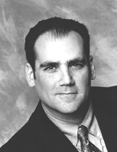
This picture is from his v-card on my hard drive. I’d sent him an article of mutual interest earlier this year. I had worked with him, as an adversary in a real estate fraud case in federal court in Brooklyn. He had it all.

He was one of those people who was roughly my age — younger, damn it — regarding whom I used to say, “That guy has the career I was supposed to have.” He wasn’t just a high-earning partner in a top international firm. I saw the quality of his work: He really knew what he was doing. He had the confidence. The look. The credentials.This was one of the lawyers I was jealous of.

Not any more. (Update from David Lat.)

—

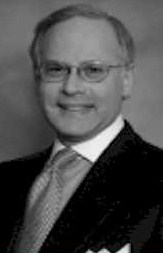
Now, this one (via @abajournal) — it happened last spring, but I had not heard the story:mark-levy-dead

He pulled his Jaguar into the garage at the law firm two blocks from the White House just before 5:30 and took the elevator up to the 11th floor.

Always an early riser, he enjoyed getting a jump on the news of the day and sharing it with friends and colleagues. His were often the first e-mails they received—a pitch to attend a Democratic fundraiser, a pat on the back for a well-written article, or his take on the latest from the U.S. Supreme Court.

But this particular Thursday morning something was different. Levy had cleared his calendar, coyly dodging the reason when he canceled lunch the day before with a longtime friend.

“He said something had come up, and that I’d be able to read about it in the papers,” the friend says.

“I thought he’d gotten a big case. I was happy for him.”

Levy, 59, was one of the most skilled appellate lawyers in the country. He was of counsel at the firm and chair of its Supreme Court and appellate advocacy practice. He had argued 16 times before the court and in January had posted a 9-0 victory in an em­ployee-benefits case for DuPont.

He was one of Samuel A. Alito Jr.’s classmates at Yale Law School. The future Supreme Court justice once house-sat for Levy when they worked together at the Justice Department—watching after the Levy family’s golden retriever. When another classmate, Hillary Rodham Clinton, ran for president, Levy knocked on doors in the middle of an Iowa winter on her behalf.

Relentlessly upbeat, if a little uptight, he was passionate and enthusiastic about even the most arcane aspects of the practice of law. An impeccable dresser, he always looked like he was ready to go to court.

If he was distressed with the arc of his career, even his closest professional colleagues had no inkling—and they certainly had no idea that he would sit down in his office chair the morning of April 30 and, with a .38-caliber handgun, fire a bullet into the right side of his head.

Mark Levy had a loving family. He seemed financially secure. He had earned the admiration and respect of his peers.

What Levy did not have, however, was a job.

Just days before he killed himself, he found out that he was being let go by Kilpatrick in a round of cost-cutting driven by the unraveling economy. He had been one of 24 lawyers nationwide laid off by the 500-lawyer firm.

Different career arc.  Different pain.  But both men I may well have wished I could switch places with in some way.

There but for the grace of God goes Ronald Coleman.  Literally.

Don’t get me wrong.  I knew someone who jumped off a bridge when he was told he was not making partner in a major law firm, too.  I was never afraid I would do that — just not that ambitious, not that way, anyhow.  I was never going “to kill myself” over that sort of thing, and that’s what I am grateful for:  Having the ability to know not to, despite an ego and a love of “the good things” that would have loved nothing more.

I didn’t know Mark Levy, but, yeah, I knew him, too.

UPDATE:  Similar thoughts from Carolyn Elefant.

Posted in Heart and spirit, Sisyphus | 2 Comments »

On the Final

Posted by Ron Coleman on September 27, 2009

I first posted this two years ago.  But it’s so good I’m posting it again (joke will become readily apparent).

I have been pondering this link from Instapundit for a couple of days now. It is about, in one sense, a cutesie trend on American campuses now called a “last lecture”:

Schools such as Stanford and the University of Alabama have mounted “Last Lecture Series,” in which top professors are asked to think deeply about what matters to them and to give hypothetical final talks. For the audience, the question to be mulled is this: What wisdom would we impart to the world if we knew it was our last chance?

Now the lecture in question in the article really was the last chance, for all practical purposes, for the professor involved, who is dying. I was, however, rather put off by this idea. The man was facing his end, I realized; how churlish could I be about such a topic?

On the eve of Yom Kippur, however — when among Jews the congregation as a whole admits to a state of sinfulness generically, but as individuals reserves the most intimate of confession for the private communication between Man and his Creator — I’ve had the chance to contemplate the matter some more. Regrettably for those among us who circulate heart-warming emails and who yet care about my opinion (uh, hi, Mom), I want to go with my initial instinct, at least as to the general trend; as to the case in the article, perhaps that requires more thought.

The “last lecture” trend is truly the emblem of ours, history’s most narcisstic era. Read the rest of this entry »

Posted in Faith and Works, Heart and spirit, Narcissus Rex | Leave a Comment »

Confusion, dispelled

Posted by Ron Coleman on September 24, 2009

This post was originally posted on my LIKELIHOOD OF CONFUSION® blog (where it was off topic, but in those days it was the only blog I had) almost exactly four years ago.  A friend reminded me of it today, and I thought it was perhaps appropriate to republish it in the season of solemn introspection between Rosh Hashana and Yom Kippur:

Last spring, I got a comment on the blog from a gentleman named Bunker Mulligan. I don’t get a lot of comments, which isn’t surprising; our content is so mind-numbing that few of our innumerable readers are in any sort of shape to do something so pedestrian as “comment.”

But Bunker did comment, and thanked me for stopping by his site. I hardly remember what I did when I was there and what sort of tracks I left. It was really two bloggers passing in the night of cyberspace.

And during this real night I was doing some routine maintenance on the site, and I saw Bunker’s comment, and I clicked through to his blog… and was reminded that blogs are people.Bunker Mulligan
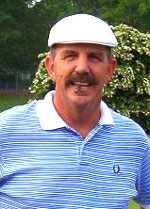
Bunker — his real name was Michael Reed; he liked golf, so his pen name was Bunker Mulligan — died. He passed away at the beginning of the summer, a total surprise to everyone; he was only ten years older than I am and looked a lot more fit than I do now.

Here was his last post:

I really don’t understand why folks who dislike the military are often the same people who push for diversity. I can tell you from personal experience that the military is the most diverse group of people you will ever meet. We’ve got ’em all. Including members of a royal family. From Nigeria. Capt. Wisdom Osagiede-Ogbewekon. He is in Iraq, working to help get their nascent government operating. As he has a perspective they can respect.

“I tell them, ‘Look at me. What does that tell you? I’m an African who is an officer in the most powerful army in the world,'” says Osagiede-Ogbewekon, a member of the active Guard and reserve. “I’m a very good example of what America is.”

In fact, Bunker Mulligan was at least as good an example. This is a little about who Bunker was:

I have lived in many places. I am a Texan, and an American, and quite proud to be both. . . .

I support President Bush and see him as the embodiment of Teddy Roosevelt, who was also disparaged as a cowboy. I also support our troops, two of whom are my sons. One of them will go overseas soon, and the other one recently returned from Afghanistan. I have less concern for their safety than I do for my other son who is a police officer. He, unlike his brothers, can’t shoot first and ask questions later.

My daughter, the youngest, is in LA making her way in the entertainment business doing casting and production.

I’ve coached baseball at every level from T-ball to NCAA junior varsity, and football up to high school. I watch sports, but am not very serious about it above high school level. I play golf, and enjoy the game more than others due to the individuality, honor, and sense of community in it. . . .

I am NOT a celebrity watcher. I get frustrated to turn on the news. With everything of import going on in this country and around the world, the lead stories are Kobe Bryant, Scott Peterson, and Michael Jackson. It is easy TV, and not hard to put a story together around them, so something more important gets overlooked because it takes real work to get the story.

So, welcome to my site. I hope you find something you like!

I have little in common with Bunker. I don’t care much for golf; I was never in the service — he was an Air Force veteran, evidently with combat experience, though I can’t really tell; he was Christian, and I’m a Jew. I fancy myself something of an intellectual, and although Bunker had two degrees, including a Master’s in international relations, he seemed more down to earth than that. But for the love of God I can tell you that I was hit so hard when I saw this personal, honest, specimen of American life blog that I just broke down.

I like to say that some people have the ability to project personality on an Internet web page. What could be a more powerful projectile than, “So, welcome to my site. I hope you find something you like!” I don’t think anyone within 50 miles of where I am, on the crest of the ancient Passaic River basin overlooking New York City, could write a more earnest sentence.

And it has been a hard day that way, seeing as how earlier this afternoon I left my office and helped bury the father of a longtime friend and neighbor — he also died suddenly, scant months after the death of his wife after a long illness.

The dirt from the cemetery is still on my heavy-soled lawyering shoes. My friend, Mike the professor, spoke beautifully, passionately, eloquently at the graveside — eloquently as in I didn’t know Mike had it in him — about how his father knew so little peace during his lifetime, pursued as he was by hard knocks economically; and how he pursued his obligation to honor his own mother, especially after his father’s early death, to a degree beyond fashionable in our times; and then how his dad had to watch his wife get sick and then predecease him… and how his solace and his joy had been his children and his grandchildren — Mike, the professor; his brother, Eric, a Harvard graduate and succesful consultant, whose children attend the local Jewish school with mine…

Mike’s dad and Bunker Mulligan weren’t linked by anything but me and by being “good examples of what America is.”

It’s been a hard, hard day in real life, outside the blog world, separate from the Redweld folders whence come and whither go all the papers I analyze, generate and quote from while I generate more; separate from the adversaries, the clients, the judges; blogs, the politics; the trademarks and the copyrights alighting on the heads of pins. A hard day for a white-collar guy feeling the earth for a change.Springtime in Clifton

It’s Rosh Hashana in a few days, and God has done me the favor of shaking me up but good on the last Wednesday of the year. All it cost was a little sweat as I shoveled the dirt, and the cost of a shoeshine.

Solomon said, “It is better to go to the house of mourning, than to go to the house of feasting: for that is the end of all men; and the living will lay it to his heart.” Ecclesiastes 7:2.

It was better.

Posted in Faith and Works, Heart and spirit | Leave a Comment »

Filler

Posted by Ron Coleman on September 23, 2009

Morris County Courthouse

I’m trying a commercial case to a jury, in Morris County, New Jersey — it’s a wild and woolly one, believe me — so I can’t really blog much.

But did you know I once had a week-long stint on Overlawyered.com?  It’s one of my proudest weeks of blogging.  (I had more time then.)

You may enjoy some of this stuff.  I know I did.

Posted in Blogophilia, Heart and spirit, Lex scripta | 1 Comment »

On Rosh Hashana, it is written

Posted by Ron Coleman on September 18, 2009

Click here for our Rosh Hashana prayers. And here for some fancy hornblowing.

May we be inscribed for a year of life … of sustenance… of peace.

I’ll be back next week.

Posted in Faith and Works, Heart and spirit | Leave a Comment »

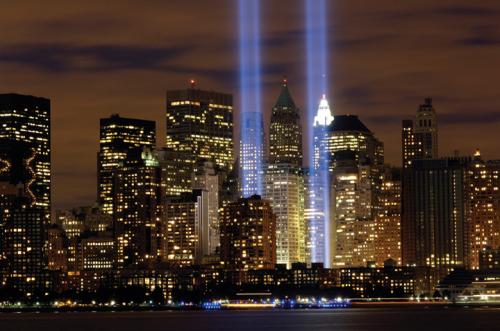
My September 11th

Posted by Ron Coleman on September 11, 2009

This five-post article was originally posted on Dean’s World.

I work in New York City. That morning I was late on the way into the office. I had to stop off at what was then called the “AT & T Phone Store” to replace my cell phone. I chose the one just off Sixth Avenue in Midtown, near the subway stop before the one I usually got off at. This was around 53rd Street — a good two and a half miles north of the financial district, if you don’t know New York.

It was a very bright, pretty day — I remember noticing this as I got out of the subway. I went into the store and found a clerk, and he was showing me the different models. And then his own cell phone, clipped onto his belt at the hip, rang. He asked me to pardon him, and took the call. Then he hung up and came back to the counter.

“My wife. A plane crashed into the World Trade Center!”

“Oh, gosh,” I said. I thought of the time during World War II when a bomber returning from Europe slammed into the Empire State Building. “What a disaster.” I had taken my family to the observatory at the Twin Towers just a couple of weeks earlier, to look at the whole world from the top of a building. The salesman and I shared a “tsk” and chose a phone, and completed our transaction.

I decided to walk over the Fifth Avenue, where my office was at the time. Two “avenue” blocks, about ten minutes of a walk, into the Rolex Building on 53rd and Fifth.

I went into the entrance on 53rd, through the cool marble lobby, up to the 12th floor, where my office was at the time. The elevator opened into our library, and the receptionist looked up.

“Did you hear?” she asked?

“About the accident at the World Trade Center?” I asked.

“Both buildings — another plane!”

Both buildings?

Another plane?

This was not an accident.

I walked past her to my office overlooking 53rd Street and switched on the radio.

This was something altogether different.

Part two here.

Posted in Americana, Heart and spirit, Metropolis | 1 Comment »

“Moore” is less

Posted by Ron Coleman on September 9, 2009

A softer view on Ted Kennedy, though not entirely different from mine on the facts — merely on the politics — from my former professor, Sean Wilentz:

[Kennedy] overcame personal flaws and searing travails to become a masterful legislator, congressional infighter, and builder of unlikely coalitions. Ironically, he achieved all of this only after he had surmounted the political entitlement that made his career possible in the first place. In an even deeper irony, of the three famous and powerful Kennedy brothers, it was youngest brother, Teddy the latecomer, who arguably had the greatest impact on American politics and government. These travails and these ironies gave Kennedy’s life dimensions of American triumph as well as of prideful, classical tragedy.

When Kennedy first ran for the Senate in 1962, at the age of thirty, for the seat that JFK vacated when he was elected president, the rap against him was that if his name were Edward Moore [instead of Edward Moore Kennedy] his candidacy would be a political joke. It was true, of course: Although he was hardly a reluctant candidate, he was very much the dutiful, slightly wayward, much younger brother in what some viewed warily as a family that was busily acquiring a new firm, otherwise known as the federal government of the United States. As the assistant district attorney for Suffolk County three years out of law school, Kennedy’s surname was really all he had going for him, and everybody knew as much–but that name, and the presumptions about the politics and connections that went with it, were magic in Massachusetts. . . .  Never again, through eight re-election campaigns, would Kennedy fail to win less than 55 percent of the vote. . . .

For many years, he did not understand how the incident at Chappaquiddick in July 1969 foreclosed the possibility that he would ever succeed JFK to the presidency or fulfill the promise of RFK’s presidential campaign in 1968. In part, this was because he would never be able to explain his actions and inactions of that night adequately (except, perhaps, to the forgiving voters of Massachusetts). But the events also marked the beginning of what would become a convergence of celebrity scandal mongering and cynical prurience that forever changed the rules of American political journalism–and from which Kennedy, with his personal demons, would not escape for decades.

Read the whole thing; Sean is a pretty fair broker, and was probably right when he wagged his finger at the the House of Representatives during the Clinton impeachment.  I still believe that, even from the perspective of a liberal, Kennedy does not merit the special treatment of internment in a privileged spot at Arlington.  And Wilentz asserts the same thing above that my cousin Brian G. does in the Facebook comments to my previous post –“it was youngest brother, Teddy the latecomer, who arguably had the greatest impact on American politics and government” — and goes further than Brian in at least suggesting at least half of the answer why that could be, he does not demonstrate it; it’s probably a comparison of apples and oranges, anyway, but if given the chance I would welcome the opportunity to debate the question with someone willing to take the “Teddy” side of it.

Hat tip to The Browser.

Posted in Americana, Heart and spirit | 3 Comments »

It sets

Posted by Ron Coleman on September 2, 2009

Summer fades

September evening on 34th Street, New York.

Posted in Heart and spirit, Metropolis | Leave a Comment »

The other side of the Prince of Darkness

Posted by Ron Coleman on August 18, 2009

JTA:

Robert Novak, the conservative columnist whose scoops broke many a career, made his reputation as a journalist by being unafraid to attack his ideological brethren.

The same dynamic underlay the contentious and at times ugly relationship he had with fellow Jews.

The article then goes on to cite when would appear to be rather tepid examples of this “ugliness,” which frankly did not compel me.  Being critical of Israel is not ugly, when it is intellectually honest.  I didn’t see, in their presumably well culled selection, any particular demonstration of dishonesty or “ugliness” — which is not to say that Novak didn’t have  a bias, and a point of view, about Israel and its Jews that were influenced by factors other than his famed fearlessness in calling a spade a spade.  This would put him in the category of 98% of humanity.  But he was no Pat Buchanan.

So was one of those “factors” his conversion to Catholicism?:

He cooperated in 2003 with the Washingtonian magazine in a feature about his conversion to Roman Catholicism five years earlier, and said that although he joined a Jewish fraternity in college, he was turned off by Judaism.

“I found the same thing in Judaism as a young boy as I did later in the Unitarian Church and then at the Episcopal Church,” he said. “They seemed very ungodly. The clergymen seemed very secular.”

Following his conversion, U.S. Sen. Daniel Patrick Moynihan (D-N.Y.) reportedly quipped,  “Well, we’ve now made Bob a Catholic. The question is, can we make him a Christian?”

Hm.  Someone say “ugly”?  Now, Moynihan himself was, of course, a Catholic (of sorts), and if he hadn’t been you might take that the wrong way (you might not know this, but many evangelicals and other Protestants don’t consider Catholics “Christians”).  But this remark could also be taken another wrong way — namely that Novak, once a Jew, will always be a Jew.   Again, Moynihan was not only not an anti-semite, he was a philosemite.  So that’s not what he meant.  Not exactly.  But clearly there’s something about the pushy, annoying, dialectically-minded Jew that is peeking out here, and his embodiment of this classic, well, archetype surely haunted Novak.

Taken as a whole, though, the story here is one of a good-hearted if intense person with a strong and independent moral sense, an inclination toward conservative values and sensibilities, and a wish for a meaningful and demanding relationship with God.  A lot of Jews, especially talented ones, fit this description.  Some find their way back to their heritage; some are so turned off by the watered-down “ungodly” clergy and “religion” of liberal Judaism that it is only repellent to them and seek a link to a greater whole, to spirituality and to transcendence elsewhere — sometimes cults, and sometimes established brands such as Buddhism, socialism or Catholicism. Read the rest of this entry »

Posted in Americana, Heart and spirit | 1 Comment »