I’m on my little vacation (as a self-employed professional, it’s very little indeed; but at least I am in a different place from where I 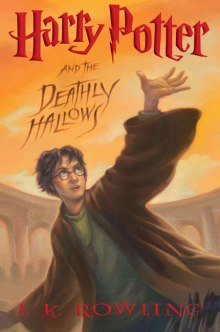 usually am, and getting a little sun and fresh air) and I just had the opportunity to finish Harry Potter and the Deathly Hallows. I liked it a lot, was very touched at a number of junctures, and feel that I was well treated by the author.
I am not a literary critic, so I am not going write a review. But here are my “bullet point” thoughts, which I throw out into the ether on the explicit premise that millions await my verdict on the last Harry Potter book, howsoever telegraphically expressed:
The series is, above all, about love. Not hardly romantic love, though more so the love among friends. But mainly it is about the love that flows from parent to child and, perhaps, from surrogate parent to child. The vehicle for the expression of love in the series is loyalty. Now, one can be loyal without love, and perhaps one can even love without excelling at loyalty; but here the true test of love is not passion, or ecstasy, or warm fuzzy feelings, but loyalty — and the sacrifice that in turn is what loyalty demands. Voldemort, of course, epitomizes the antithesis of loyalty.
We see, indeed, that loyalty is only tested, and only rendered meaningful, by self-sacrifice, a negation of the self for others; indeed this is the absolute moral and the basis of salvation at the end. This is a very Judeo-Christian message, if not the Judeo-Christian message, and all the more a shame that poorly-ground religionists condemn the books. Read the rest of this entry »


 The Los Angeles Times says pretty much all the archives involving presumptive presidential heir Hillary Rodham Clinton’s work while on the White House staff are
 Why Christianity is and Islam Isn’t.


